I tried to write a short message after the conference, and every version I came up with sounded like a platitude after such a rich weekend. So here's the long version.
“Just doing the job”
The session that has stayed with me from our Conference was our councillors talking about what the job actually is. They talked about keeping the area clean. Making the basics work. Helping people with housing - single parents and families who had nowhere else to go. But the thing they kept coming back to was how grateful people were. Unbelievably grateful. And often all they'd done was their job (sometimes just a single email).
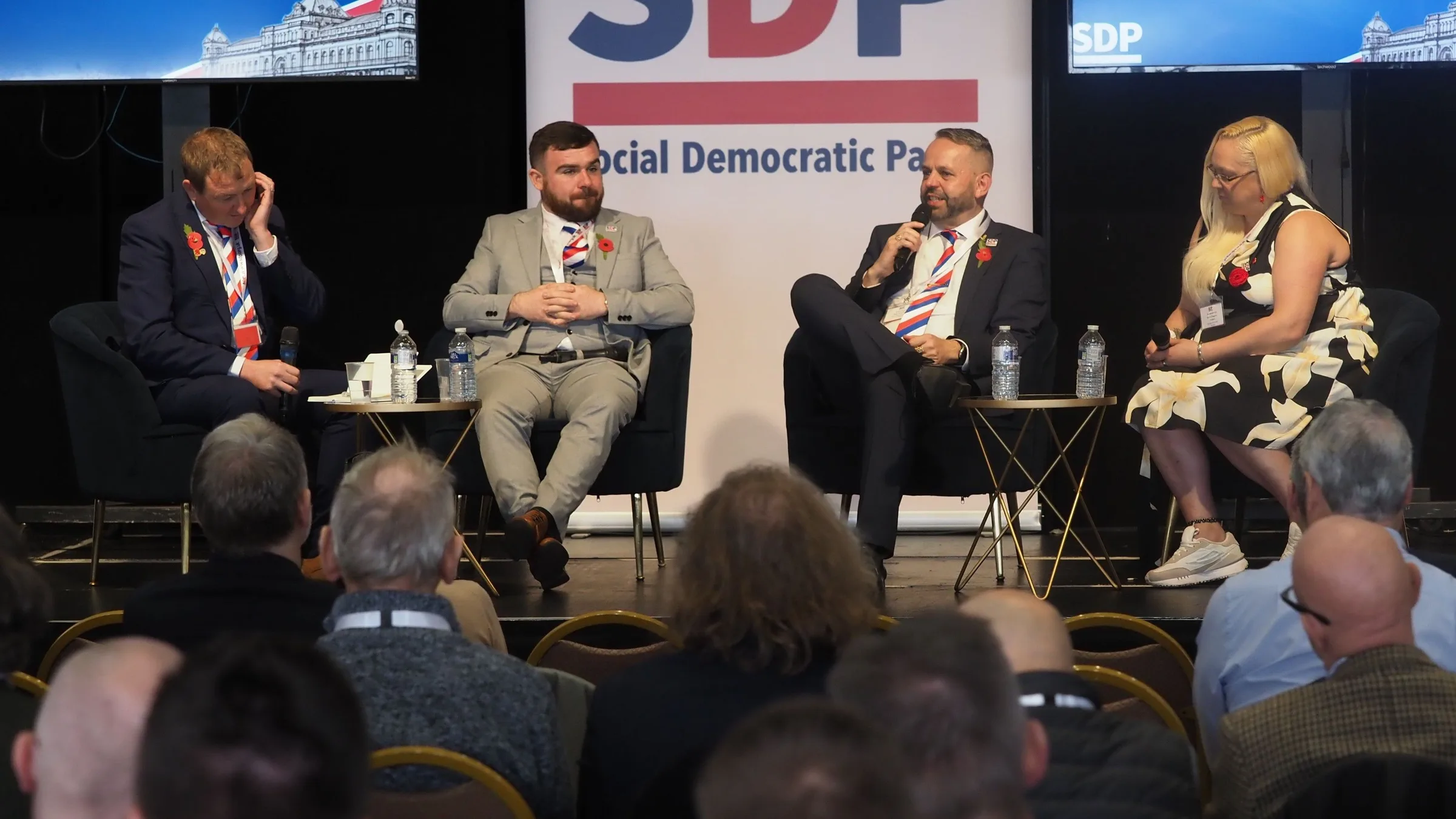
That means that councillors before them had become so complacent that just simply doing the job changes people's lives. People who had been desperate and ignored couldn't believe someone had actually picked up their case.
I recently wrote about 'cocktail eyes': you're talking to someone at a party and they're looking over your shoulder for someone better to talk to. That's how a lot of politicians now appear to treat politics. You get local councillors campaigning on Palestine while the bins don't get collected. You get national politicians more excited about the global stage, or the tech sinecure waiting for them when they leave, than about the people being harmed by their neglect. Our councillors are the opposite. They even voted down their own pay rise.
As leader I'd meet with our councillors regularly: find out what's working, hear campaign ideas and work out where they need more support than they're getting. Then we work out how to replicate their successes in the next ward, and the one after that.
Peasholm - the inheritance
On Sunday morning I blew away the cobwebs by walking along the North Bay in the wind and rain. As I left the beach, I happened upon Peasholm Park: a Japanese-style garden in the middle of a Yorkshire seaside town, with a lake, an island, a pagoda and a waterfall. Since 1927 the lake has hosted naval battles with model boats, and it still does every summer.
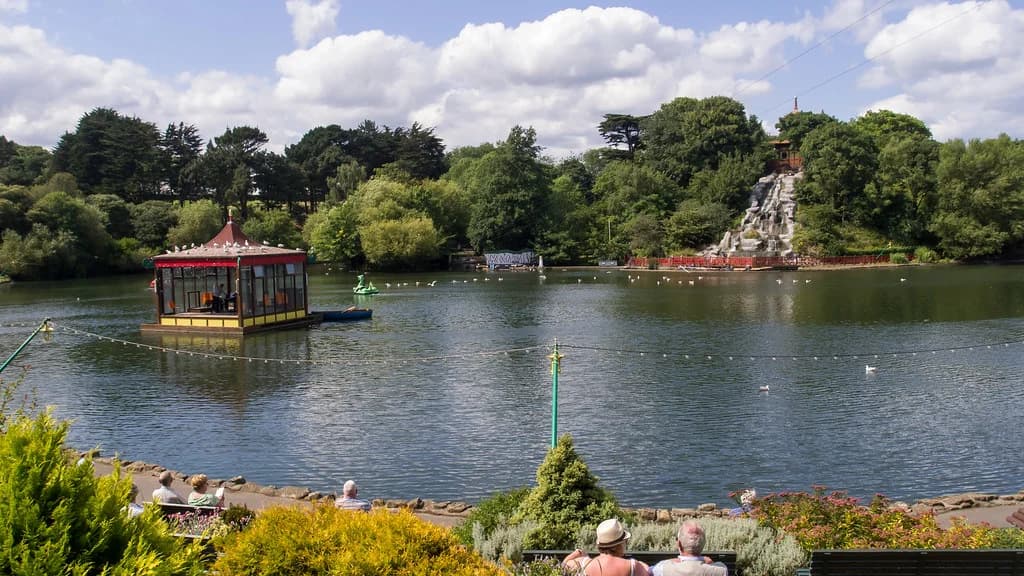
I looked up the background and found out it wasn't a celebrity architect's idea, but Harry Smith's - the borough engineer, the man whose day job was the town's roads and drains. He looked at a field the council had just bought and decided it could be something better.
The people who built Peasholm weren't just building something for themselves. They were building for people who hadn't been born yet, people they'd never meet.
This country is an inheritance - we receive it, we build on it, and we pass it on. We know that there are invisible but important ties that bind us. We know that not everything of value has a price tag. That's the kind of party I want to lead.
Harry Smith understood it. Our councillors understand that. Ol' Cocktail Eyes politicians don't.
Why people come to the SDP
In one weekend I met people who had come to us from Reform, Labour, the Lib Dems and the Conservatives.
Ed Maxfield came from the Lib Dems. He ran Norman Lamb's first winning campaign in North Norfolk and co-wrote 101 Ways to Win an Election. Alex Culley organised seventeen branches across Hampshire and the Isle of Wight for Reform before he came to us. Aaron Powell, our secretary, served as a Conservative councillor.
None of them came here to turn us into the party they left. They know the old left/right dichotomy is dying and that we need something that's both more pragmatic and more imaginative than 20th century ideology and heedless globalisation.
The SDP has been bold in diagnosing Britain's underlying issues. William Clouston saw the problems long before others. “The End of Indifference” remains a clear-eyed repudiation of the liberal, globalised economic model where nobody cares what's made where, how hollowed out our economy becomes, or whether communities and families can still make a life where they are.
Now we need to take that diagnosis into the age of AI and a more dangerous, multipolar world, and set out what Britain should become in the 21st century: how we think, adapt and emerge from our current malaise, to become a peaceful, prosperous post-empire nation. That will require us to draw on our country's Enlightenment traditions and our social democratic philosophy to give our fellow Brits a serious, trustworthy party.
As we build that, I don't think we need to worry much about whose voters we're taking. We're offering something no mainstream party has offered for decades: a party that works in the national interest, for the common good. That means we'll find people from right across the political spectrum. We might even redefine the spectrum itself.
Courage
I don't think there are many party conferences where you get to meet the party poet, but we did. Barney Ashton-Bullock read “For Social Democrats, Scarborough, 2026” at the close, and we later talked about Dylan Thomas, who he references in the poem (“some half recalled lush of poet”).
I have a tattoo on my leg that represents a line from 'Fern Hill' - "Time held me green and dying / Though I sang in my chains like the sea" - for my mum, who loves Thomas, and for my dad, who embodied that line during his terminal cancer.
Dad came up again at the hustings, when Jon Mabbutt, SDP London Secretary, asked us about how we could demonstrate resilience as a leader and I shared this story:
That's what resilience means in leadership. If you ask people to give you something, you owe it to them to find the strength.
Fuel in the tank
The AGM was a sobering reminder of where we are. Money is tight. Around 200 activists have pushed this party uphill for years, but now we need the fuel to get us to Parliament: members, donors, candidates, and the comms that connect them.
I don't buy the myth that we'll never find donors. Look at who was in that room: people who paid their own way, gave up their weekend, and put far more into this party than their subs. There are people out there with more money than time who share our belief that our country deserves - needs - better. Our job is to go and find them.
So these are the first four things I'd do. They're the start of my manifesto, which I'll publish next week.
Fix how we communicate
I'll run a short comms project with experienced communications professionals and party members, to put the right pieces in place so that every regional chair, campaigner, member and spokesperson can explain the party clearly, in the same way. This is causing more friction than anything else and it's holding us back. The first version won't be the final one. We get it out, test it and improve it. Done right, this is how we bring members in.
A campaign strategy project
Experienced campaigners and smart people in a room, planning for the local elections and for a possible snap election in May, and working out which seats we target, how and why.
A donor push
I'll pull the pitch together - ever mindful of preserving our party principles - and start the outreach myself, alongside Chris Bowden, my Head of Strategy, and other experienced team members.
A technology review
I'll ask Chris to run a technology review, so a small party can punch well above its weight. We should be agile and efficient technologically, and at the moment we're not. It doesn't have to be expensive, and he's already started the work.
Someone said to me in Scarborough, "you're going to have your work cut out." Absolutely. But I won't be doing it alone, and after this weekend I know there's a lot of people ready to work alongside me.